|
||||||||||||||||
 |
 |
|
||||||||||||||
|
|
|||||||||||||||
|
“The five languages of breath, vocalization, contact, stillness, and movement are all forms of physical activity, so there are multiple pathways to pursue. Your health is not dependent on only a few standardized forms such as weightlifting, aerobics or even Yoga.” |
Movement as Medicine: Body Wisdom for Modern Times Originally published in the Independent Coast Observer, March 2009
We live in exciting times. Scientific knowledge about the human body has grown tremendously in the past 30 years. Discoveries in the fields of bodywork, sports psychology and the somatic arts have also blossomed. You may not know of the somatic arts in particular - technologies of the body that focus on movement awareness and expression from the inside out. Yet, it is worth your effort to find out about them as personal collaboration with your body is essential for ongoing health and well-being at any age. Many of us are ignorant about the benefits of understanding our bodily intelligences through no fault of our own. Physical education in most schools is exclusively sports education, using the body as an instrument to accomplish a competitive goal. PE has little to do with understanding bodily intelligence or learning physiological self-regulation. We have all missed out on an important aspect of our overall preparation for life. In spite of the proliferation of new wonder drugs and other achievements in allopathic medicine, the majority of illnesses in the modern world are "lifestyle diseases". These disorders, as doctors have pointed out, can be positively influenced by even minimal physical activity. Yet, the power of movement and what is possible is still a mystery to many. Even the current debate over healthcare reform has not even begun to address how teaching people to be more responsible with, and responsive to, their own bodies can alter the landscape of medicine and dramatically reduce healthcare costs. After many years of working with the body and its expression, especially with people challenging chronic illness, I began to formulate the concept of “movement as medicine”. What can we pro-actively do for our health with what we have been given by nature? What technologies are hard-wired in our system so we can easily access and activate wellness? I identified what I consider the basic languages of bodily intelligence: breath, vocalization, contact, stillness, and movement. These five languages can be used for an articulate dialogue within your body, promoting physical health, emotional well-being and creative satisfaction. The five languages are all distinctly different forms of physical activity, so you have multiple pathways to pursue and enjoy. Once you learn the grammar and vocabulary of the five languages, connection with your body is available at any moment as your body is always with you. It is not necessary to create another segment in an overly scheduled life to squeeze in movement time. You are movement! Whether you take a few minutes sprinkled here and there throughout the day, or give yourself a longer time frame for practice, the use of the five languages can make the difference between living anxiously and breathlessly, or graciously and securely. Let’s take a moment to focus on the first language: breath. You may ask yourself, why learn to breathe? Breathing just happens automatically - I’m already breathing! Yet, breath is the primary movement of life. The breath is actually a versatile instrument - once you learn various ways to play it, you can create amazing music. By shifting the tempo and duration of the inhale, of the exhale and of the pauses in-between, breathing can change your internal chemistry. And when your breath changes your chemistry, it also alters your mood, your state of mind, and your feelings. Breathe slowly to sedate energy and relax. Breathe quickly to stimulate energy and invigorate. Take a few regular breaths now with awareness. What do you notice? Is your breathing strained or easy, shallow or full? Notice what happens with your ribcase, shoulders, and back. You might notice you breathe upwards and lift your ribcase. Many people breathe this way, indicating primary use of the intercostal muscles of the ribcase. Those muscles are actually designed to be the helpers, not the main moving force, so you don't get air into the lower lobes of your lungs. That is the role of the central diaphragm: a 360-degree, dome-shaped muscle, which divides your chest from your belly. Each time you inhale, the diaphragm contracts, flattens out and presses down towards your pelvis. Each time you exhale, it relaxes and floats back up towards your heart. My favorite image for this action is that of a jellyfish, pressing down and floating back up in the depths of the ocean, with all the time in the world. The average flex of the central diaphragm is about 1 inch, whereas for people who practice deep diaphragmatic breathing, the flex is between 2.5 - 3.5 inches. Breath and sound practices create greater flexibility and strength in the diaphragm, which impacts not only your lungs, but other body systems as well. Your abdominal organs are massaged and pulsed by the movement of the diaphragm, keeping them toned and in shape. Your heart doesn’t have to work so hard when you breathe deeply and fully. The diaphragm shares the heart’s workload, enabling easier circulation and maximizing oxygen exchange in the cells. Not taking advantage of the harmonious design and functioning of your body creates inefficient action. This not only wears out your system over time, but also diminishes the pleasure of being a moving body. In my workshops and individual sessions, I teach you the tools – the five languages of breath, vocalization, contact, stillness, and movement - and a creative method for collaborating with your body - playfully, pragmatically, and pleasurably. Ongoing use of these bodily languages is much more likely if you enjoy them and get positive feedback from your body. They are also much more interesting if they evoke your curiosity and engage your creativity. So, take a moment now - and then commit to each day hereafter for at least 5 minutes - to appreciate and enjoy your breathing body. You will be surprised by what you discover! As an older client remarked: "I didn't know that life could be so much fun and so interesting at this stage of my life."
|
|
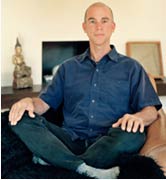
Jamie McHugh. |
|
||||||||||||
| © Copyright Jamie McHugh. All rights reserved. About Jamie | What Is Somatic Expression? | Courses | Calendar | Somatic Expression Articles | Somatic Expression Links | Products | Contact Jamie McHugh | Home |
||||||||||||||||